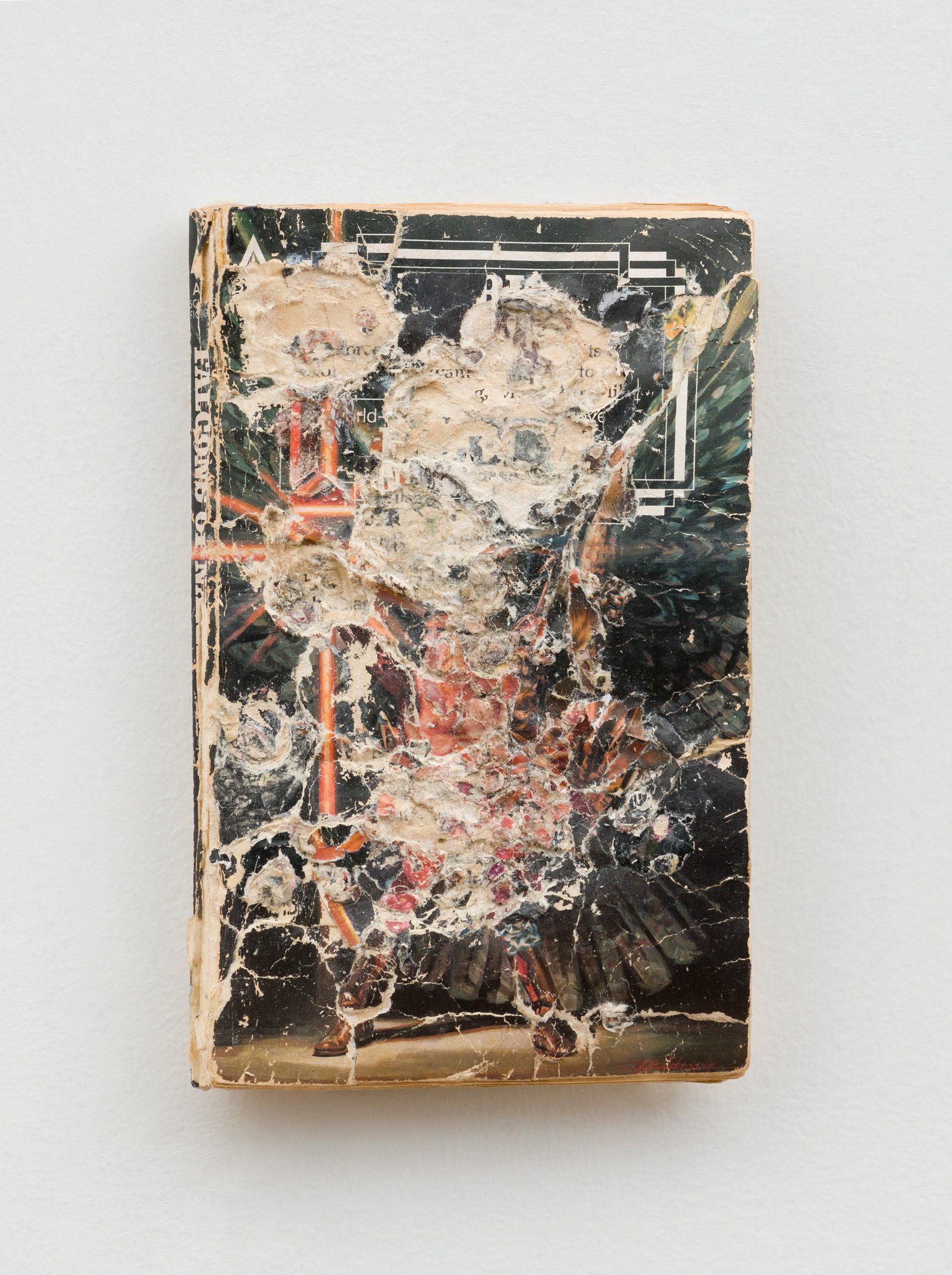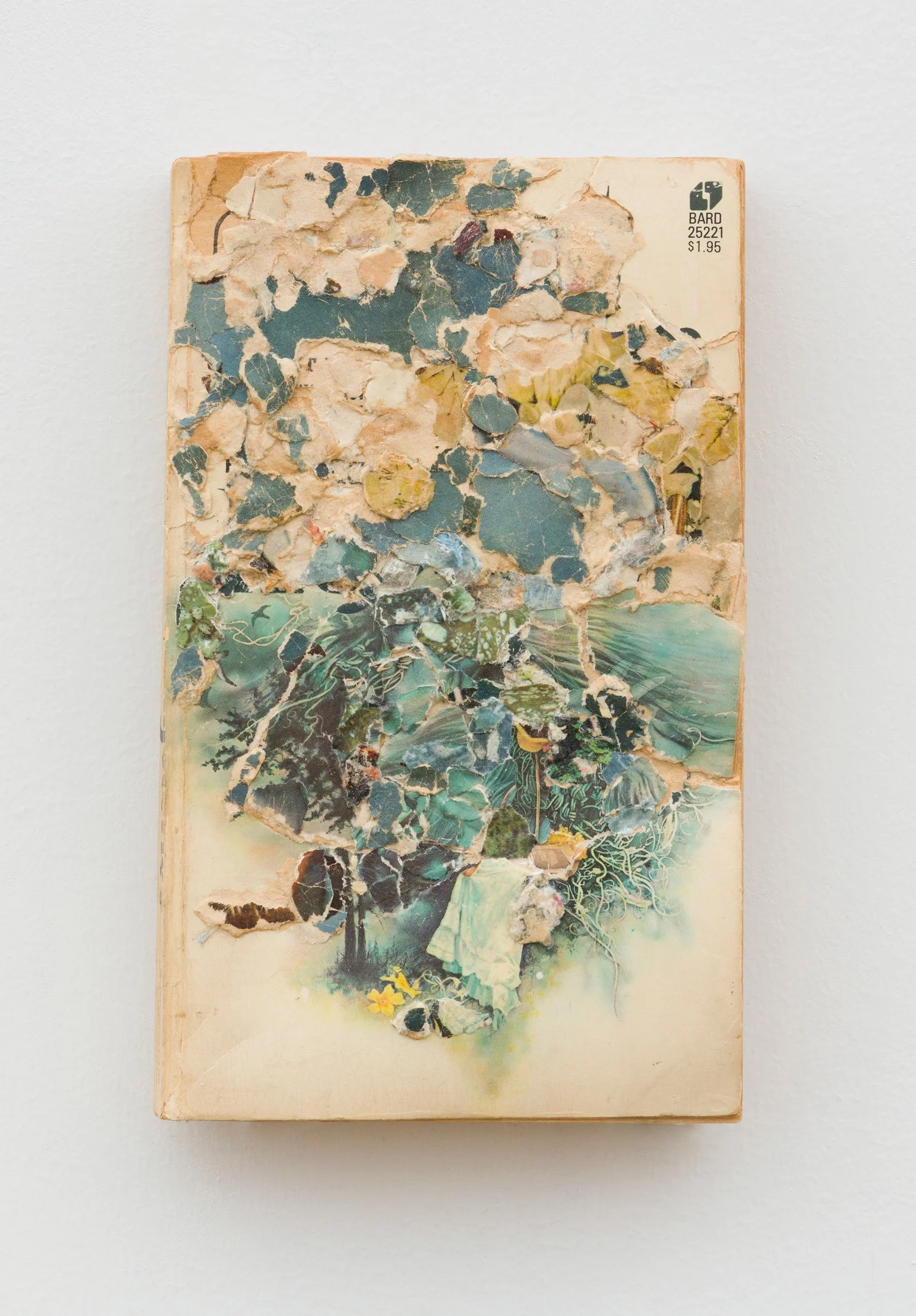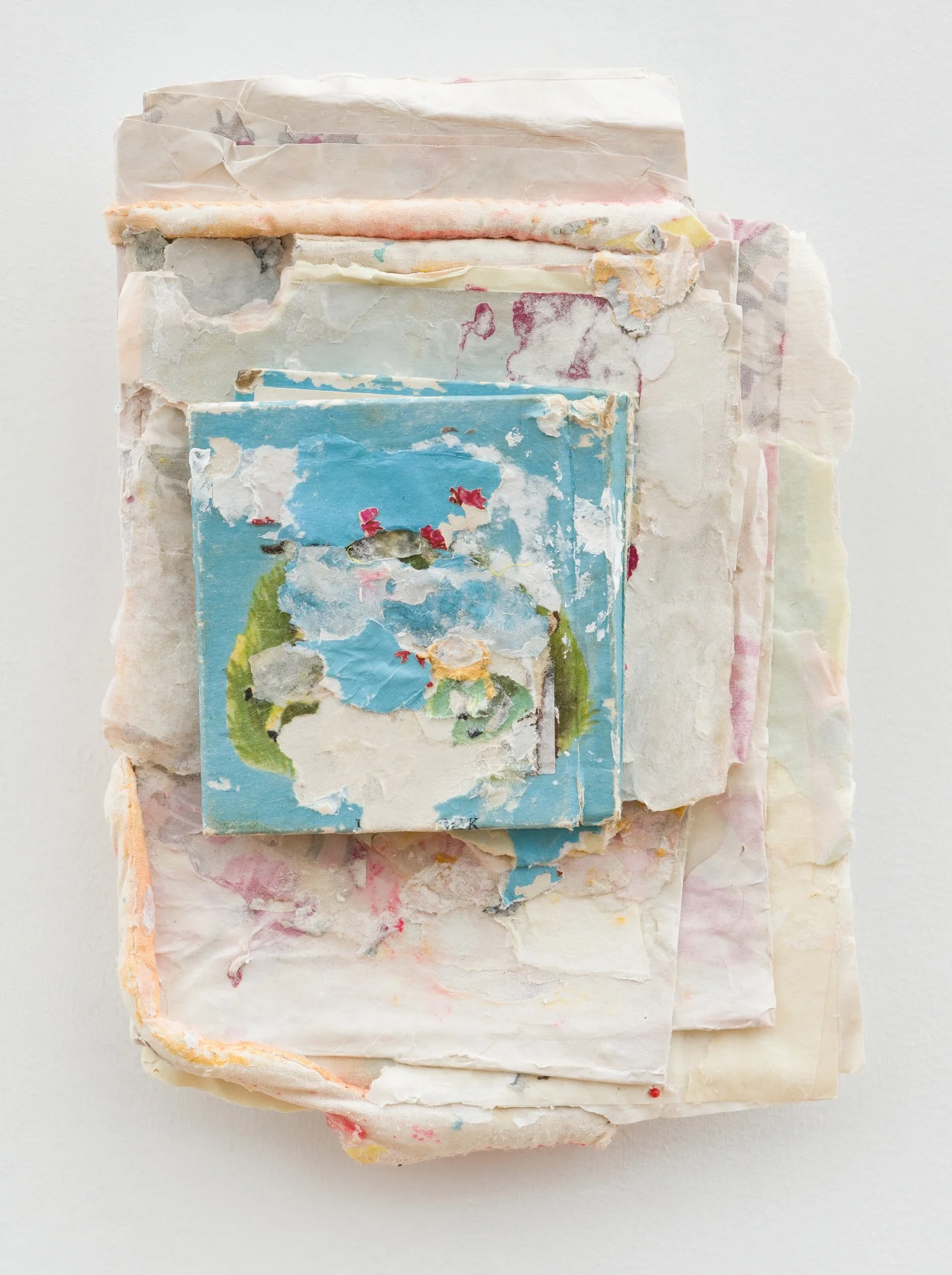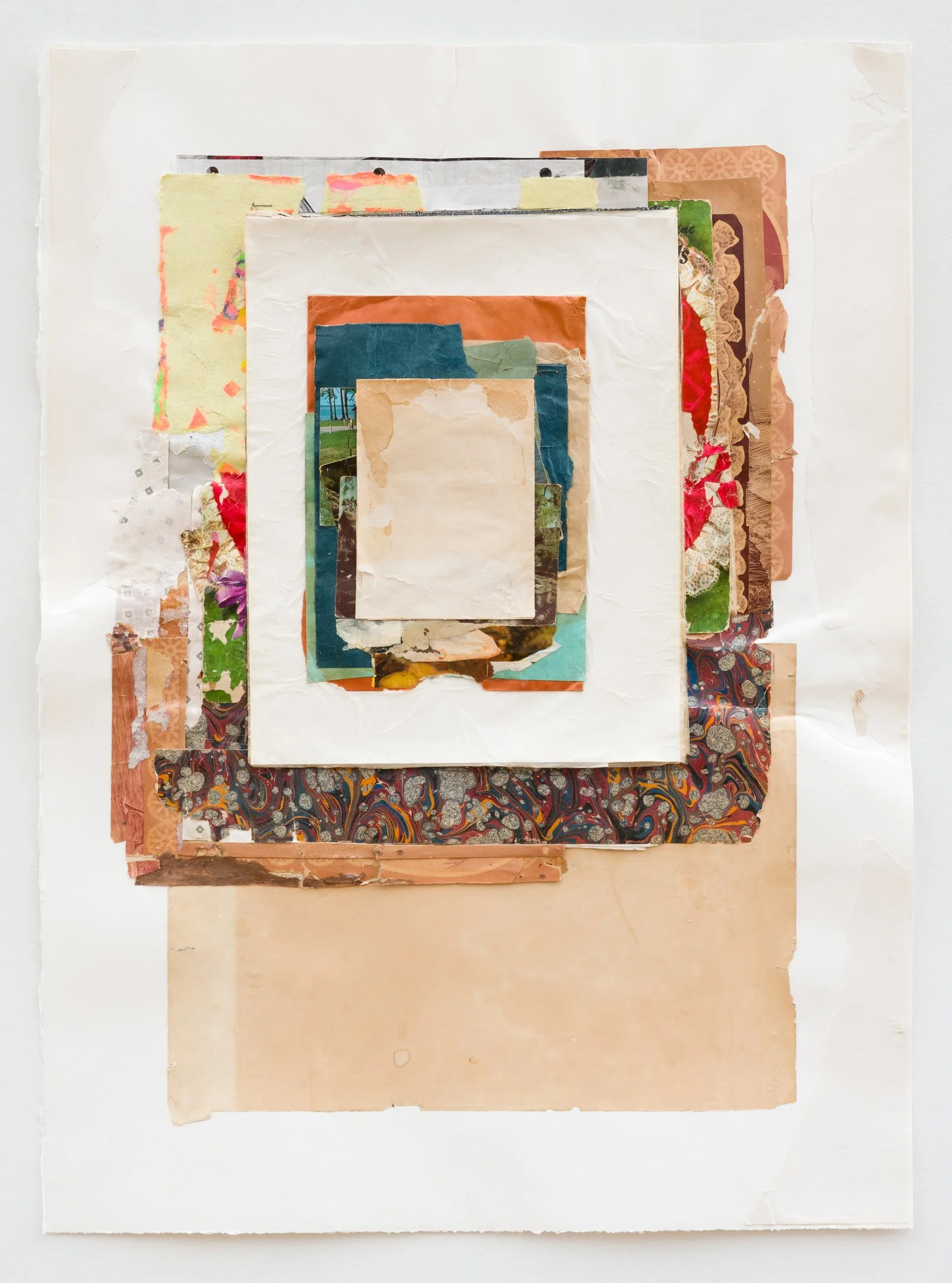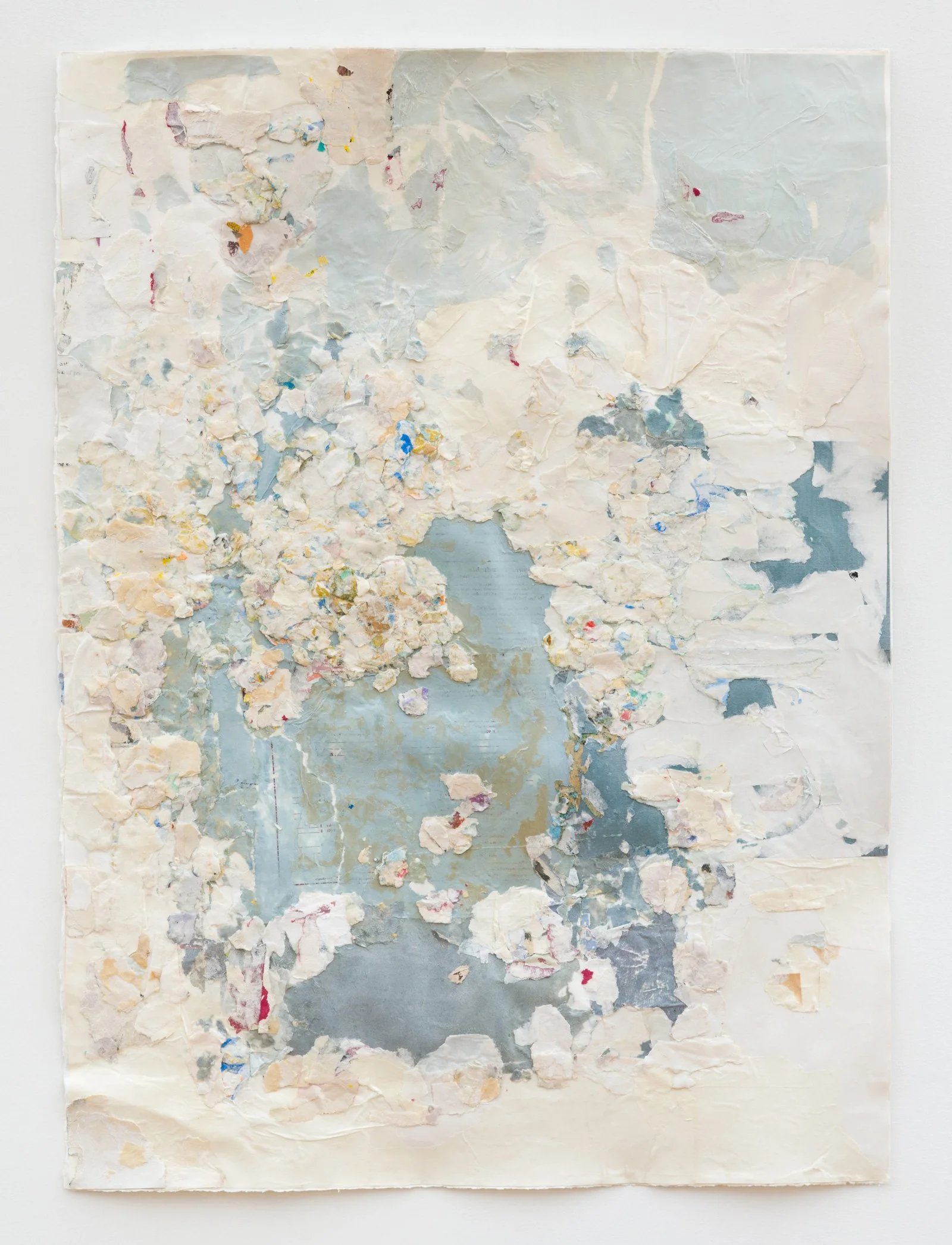
“Collage also relates to reuse and repair, reckoning with history and memory, and to acknowledging the past as an active component of the present.”
— Andrea Burgay, 2026
1) LOCATION?
I live and work in Brooklyn, NY. 🇺🇸
2) YEARS COLLAGING?
I started making collages as a child—I particularly remember an alphabet book I made of cut-out pictures for each letter, as well as collecting and cataloging cut-outs from magazines and newspapers, postcards, and all kinds of ephemera.
I studied drawing, painting, and sculpture in art school, but collage was something I was always doing on my own, in the background. It sometimes surfaced in my work in different ways, like cut out silhouettes of the models in figure drawing or collage studies for paintings.
Once I started making art seriously on my own, collage soon emerged as my principle way of working. It’s been 20 years since then.
3) WHAT DO YOU LOVE AND DISLIKE ABOUT COLLAGE?
I see collage as both a medium and a method—and the one that best expresses how I think, see, and relate to the world.
As a medium, collage starts with material that already exists, solving the problem of my dislike for the blank page or white canvas as a starting point. Transforming existing materials becomes a way of responding to what we encounter in the world. Through this process, we have the ability to bring attention to what is overlooked or misunderstood, as well as to alter, question, and deconstruct dominant narratives.
Collage methods, the physical actions by which we make collage, can be metaphors for many things and my interest is in how these might convey psychological states and experiences—salvaging, destroying, dismantling, deconstructing, putting back together, unifying fragments, recontextualizing, and forming connections. Collage also relates to reuse and repair, reckoning with history and memory, and to acknowledging the past as an active component of the present.
4) BIGGEST INFLUENCES?
That’s a hard one, as there are so many. In the last few years, a few artists who’ve had an impact on how I think about and make my work include Joan Mitchell, Alberto Burri, Hannelore Baron, and Elliott Hundley.
The many wonderful collage artists and curators, many involved with my project Cut Me Up, that I’ve been very privileged to know also have a huge influence on how I think about collage, including, Todd Bartel, allison anne, Craig Auge, Kirk Read, Teri Henderson, and Maximo Tuja (Max-O-Matic).
5) ANALOG VS DIGITAL, PROS & CONS?
My making process is deeply based in the experience of physical manipulation of materials. I feel strongly that art made by the human body conveys this through the work and creates a visceral response in the viewer—a form of recognition and connection. This is very important as we move towards a digital-based world where everything is processed on a screen or in our heads.
Digital collage offers a wider range of imagery and ways of manipulation and is also a way to explore ideas before committing to physical actions, of course.
I’m very interested in the work of artists who understand how to use both approaches, as well as the benefits of each and how they impact the viewer. The work of Edgard Barbosa—whom I know you’ve featured in a previous interview—is a great example of a hybrid approach. Using digital tools, he emphasizes the physical manipulation of paper—wrinkles, folds, and tears—creating prints that engage us intellectually while evoking the tangible presence of the material.
6) THREE TIPS FOR SOMEONE STARTING OUT IN COLLAGE?
Collage is a wonderful medium to explore what draws you—from specific types of imagery and materials—to how you can create meaning from connecting and arranging elements.
It can be revealing to explore different ways of working. Making spontaneously without constraint, then reflecting on the choices you’ve made and considering what they might mean to you can help .
One of the most-asked questions I receive is, “What kind of glue do you use?” Experiment with different types of glue and ways of applying it. Decide whether you want flattened seamless imagery or the physicality of warps and bulges. If you are concerned about preserving your work over time, use a PH neutral adhesive. I use a PVA bookbinding glue.
7) HOW DO YOU SPEND YOUR DOWNTIME?
I frequently see art at galleries and museums, wander my neighborhood in Brooklyn, or visit parts of New York City that I still enjoy—the East Village and Strand Bookstore, Chinatown, and the beaches, where I like to reflect and drink coffee.
At home I’m usually reading, cooking and watching movies or, recently, reruns of The X-Files.
8) WHERE DO YOU SEE YOUR ART PRACTICE HEADING?
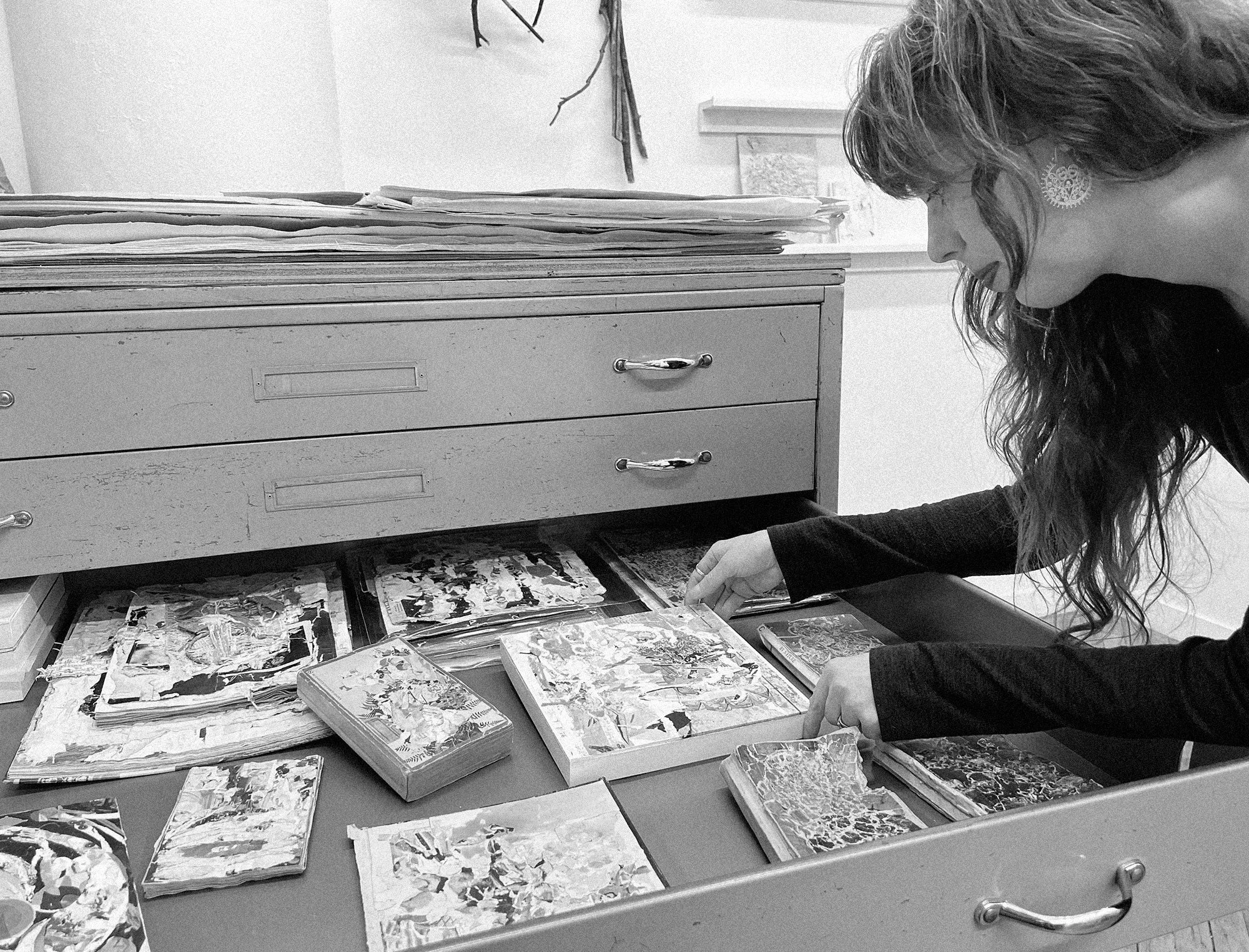
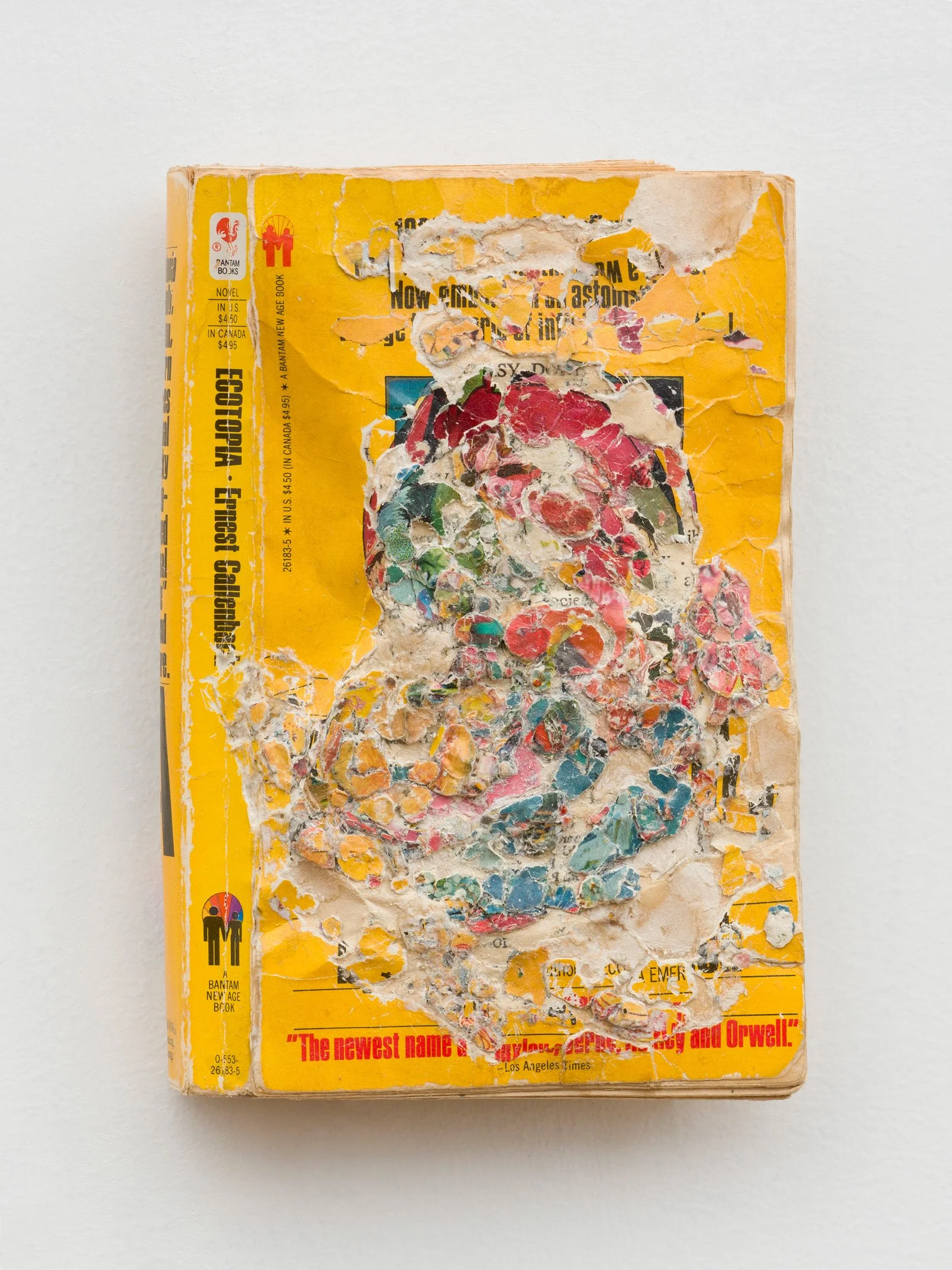
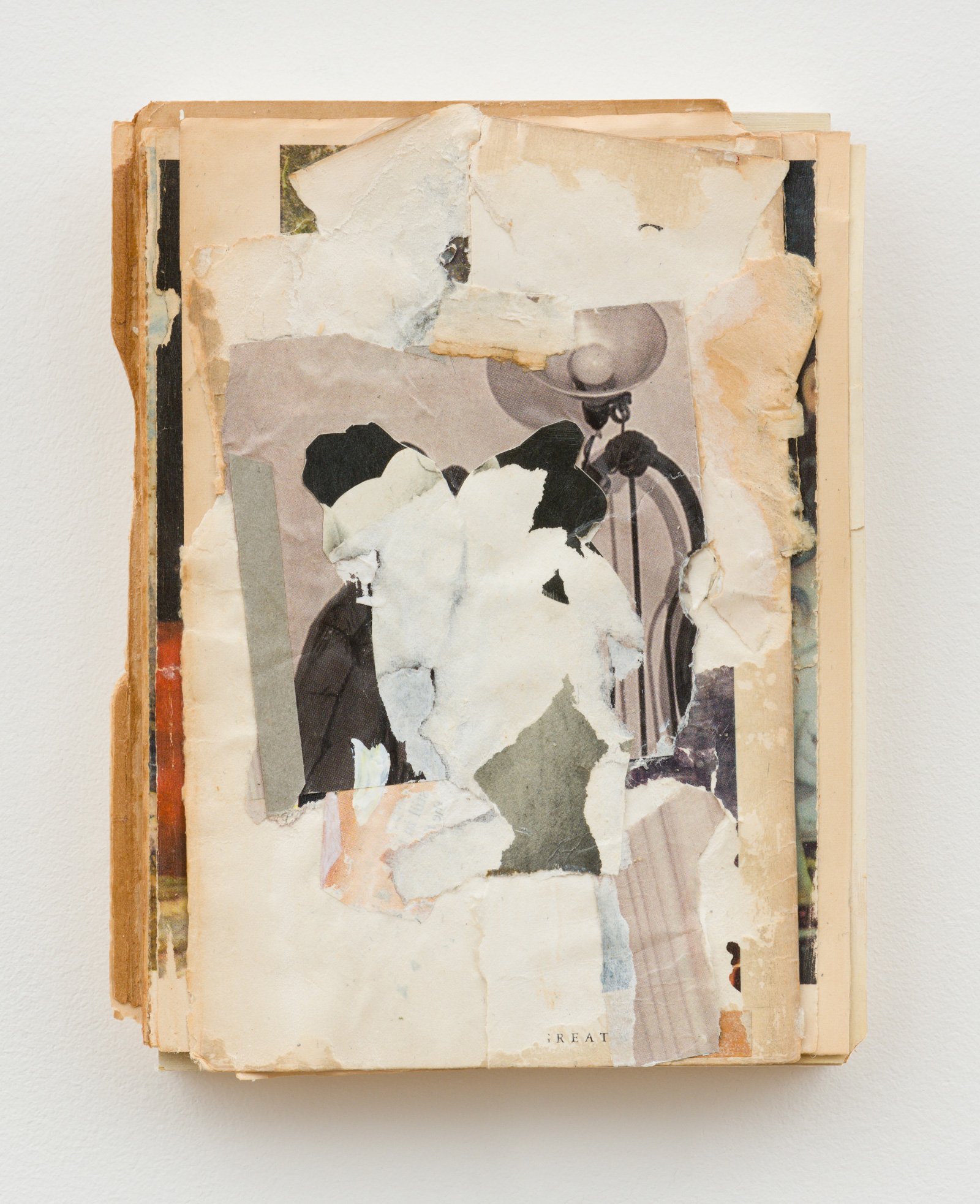
Right now, I am wrapping up several series and exploring making work that highlights different aspects of my process. One of these is works that preserve my palettes of paper fragments—sorted by color, texture, paper type, or era—and using these arranged stacks as components within large-scale works. Another new approach uses opened books and periodicals as a starting substrate. I am also interested in continuing to make work inspired by different forms of paper media, now thinking about greeting cards and souvenirs.
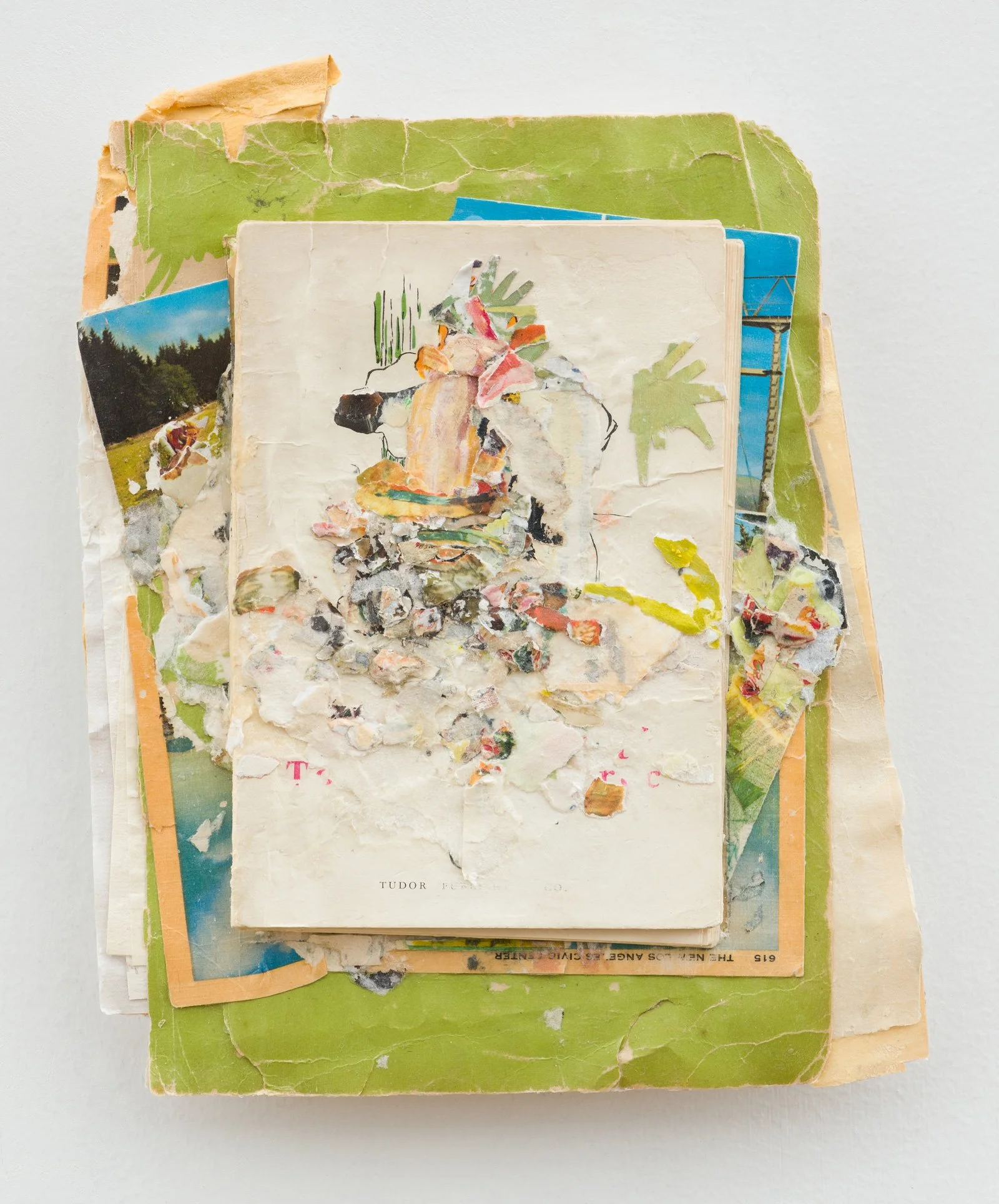
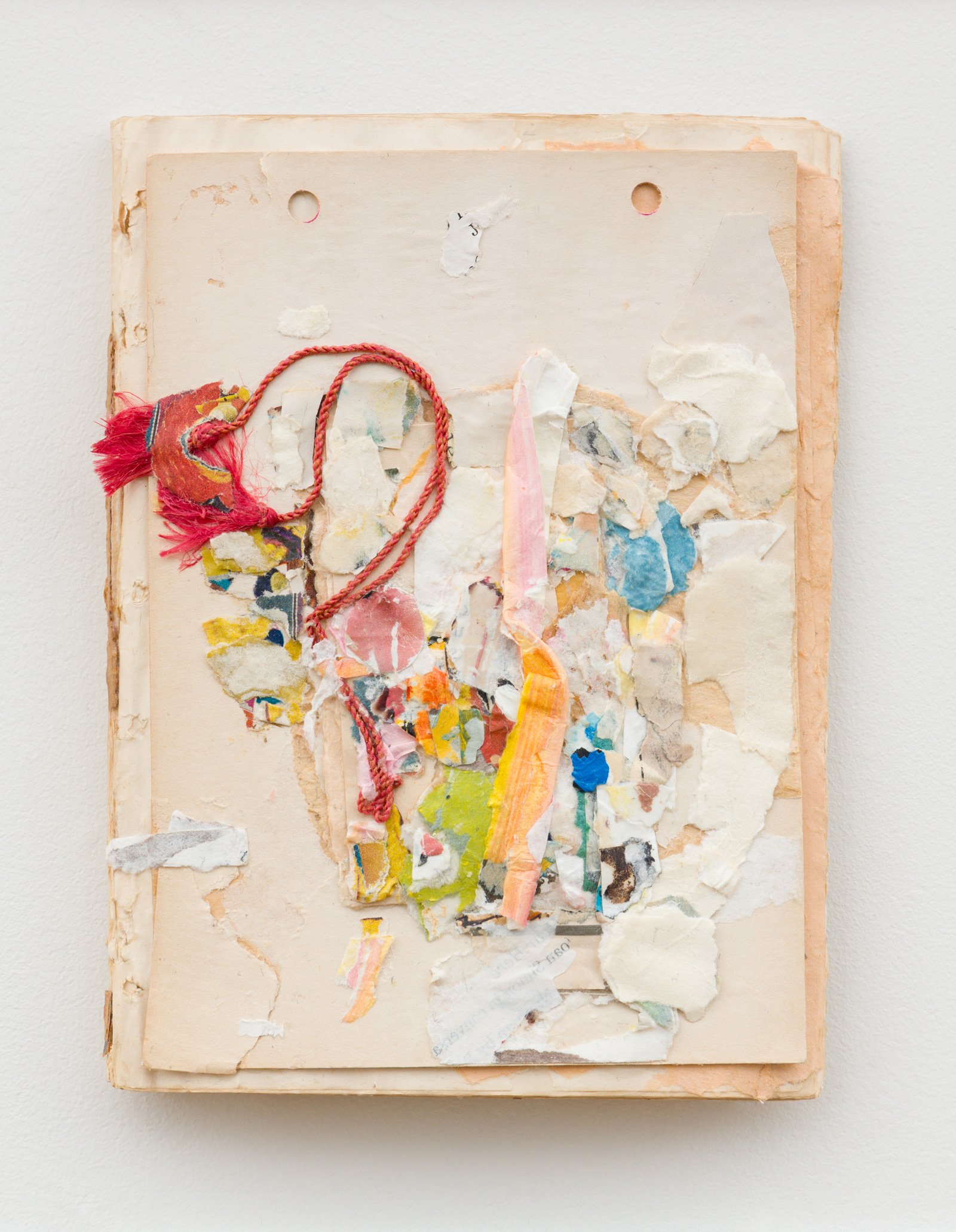
Accumulations: Views, Book, layered paper, postcards, and collage on panel, 9 x 7 x 1.5”, 2025
9) WHAT THREE ARTISTS SHOULD WE CHECK OUT?
Allison Anne is an artist whose work always gets me, walking a fine line between use of images and abstraction. I have a piece of theirs in my collection and it’s one of those works I could look at forever.
Alison Owen’s work often combines paper fragments with her ceramic vessels, a lovely and provocative interplay of object and image.
Craig Auge has made a language of his own out of patterning and repetition in his paper-based works and installations, where shape, rhythm, and emphasis communicate so much.
10) WHAT MUSIC ARE YOU LOVING RIGHT NOW?
My studio days are accompanied by WWOZ New Orleans.
I’ve recently been reviving my love of the band Cursive and always have Lou Reed on repeat.
11) UP-AND-COMING EXHIBITIONS OR PROJECTS WE SHOULD KNOW ABOUT?
I’ll have works included in:
-Pieces too short to save: A survey of contemporary collage, a show curated by and in tribute to the late great collage artist Tony Fitzpatrick at SoNa Chicago Contemporary Art in Chicago, IL, US from April 8-May 30, 2026.
-The Collager IV at Galerie Noord, Groningen, Holland, May 23-June 18, 2026.
I am co-organizing a major collage event:
-Making Meaning: A Collage Symposium—A gathering to explore new perspectives on collage history, curation, publishing, and making at the Vassar Institute for the Liberal Arts in Poughkeepsie, NY from July 22-24, 2026. The program includes a Keynote presentation by Freya Gowrley, writer of Fragmentary Forms: A New History of Collage, and sessions with artist and curators Todd Bartel, Teri Henderson, allison anne, Craig Auge, Rowan Buffington, Mario Zoots, and more as well as workshops, a book fair, and a series of exhibitions in the surrounding area.
Cut Me Up Magazine Issue 17: Razzle Dazzle, my ongoing collage publication, currently has a call for works that transform the previous issue to explore pattern in all its contradictions—as pure surface design or containing deeper symbolism, as strategy or accessory, as structure or shimmer.
See more 👀
Gram: @andreaburgay
Web: Andreaburgay.com